
The short answer
You need duct cleaning when there's a clear reason, such as visible debris, musty smells, pests, or recent remodeling. A fixed calendar schedule isn't a good reason on its own. ArcticPoint HVAC Repair inspects your ducts first, then recommends cleaning, repair, or replacement based on what we actually find.
Your ducts carry all the air your furnace, air conditioner, or heat pump moves through your home. Over time they collect dust, pet hair, construction debris, and sometimes worse. In the Santa Clara Valley, long dry summers let fine dust settle into return vents and duct runs, and mild, damp winters can bring moisture into the crawlspaces and attics where ducts often run. ArcticPoint HVAC Repair cleans and inspects duct systems for homeowners in San Jose and nearby cities. We'll tell you plainly whether cleaning will help, whether the real issue is a leak or a damaged section, and what we'd recommend for your home.
Signs Your Ducts May Need Cleaning
Not every home needs routine duct cleaning. Many systems run fine for years with nothing more than regular filter changes. Cleaning makes sense when there's a specific reason, such as:
Some symptoms look like dirty ducts but have other causes. Uneven temperatures between rooms, weak airflow at certain vents, or rising energy bills often come from leaky or disconnected ducts, a struggling blower, or a clogged coil. That's why we inspect before we recommend cleaning.
- Visible dust or debris blowing out of supply registers when the system starts
- Dust building back up on furniture soon after you clean
- A musty smell when the heat or AC turns on, which can point to moisture in the ducts
- Signs of rodents or insects in the ductwork, such as droppings, nesting material, or scratching sounds
- Recent remodeling, drywall work, or floor sanding that kicked up fine dust
- Moving into a home where you don't know the system's history
- Filters that clog much faster than they should
What We Check
A duct cleaning visit should start with a look at the whole air path, not just the vents you can see. We check:
If we find mold-like growth, we'll show you what we see and explain the next steps. That may include fixing the moisture source before cleaning, because cleaning alone won't solve a recurring moisture problem.
- Supply registers and return grilles for buildup and airflow
- The return plenum and filter rack, where debris often collects first
- The blower assembly and blower wheel, since a dirty wheel moves less air
- The evaporator coil, when it's accessible, for matted dust or growth
- Duct runs in the attic, crawlspace, or garage for crushed, torn, or disconnected sections
- Joints and seams for gaps that pull in dusty attic or crawlspace air
- Insulation on ducts that run through unconditioned space
- Signs of moisture, mold-like growth, or pest activity
Cleaning, Repair, or Replacement
Sometimes cleaning is the answer. Other times the ducts themselves are the problem. Here's how we think about the options.
Cleaning fits ducts that are structurally sound but dirty. Examples include rigid metal duct or intact flex duct with dust, debris, or remodeling residue inside.
Repair fits ducts with localized damage, such as a disconnected run in the attic, a crushed section of flex duct, leaky joints, or missing insulation on part of a run. We can reconnect, reseal, re-strap, or replace individual sections without touching the rest of the system.
Replacement makes sense when damage is widespread. Brittle older flex duct, torn inner liners, heavy rodent contamination, or a layout that was undersized from the start are all reasons to consider new ductwork. Cleaning badly deteriorated flex duct can damage it further, so we won't recommend cleaning when replacement is the better call.
If you're thinking about switching from a gas furnace to a heat pump, check the ducts at the same time. Heat pumps work best with good airflow, and some older duct systems need changes to match. Bay Area Air District rules don't require you to replace a working furnace. However, gas furnaces manufactured from 2029 on must meet a zero-NOx standard, so many homeowners are planning ahead. Incentives through BayREN and local clean energy providers change by funding cycle, so we confirm the current offer before including it in any quote.
What Affects the Cost
We give you a written quote after we've seen the system. These are the main factors that affect it:
We list cleaning separately from repair items on the quote, so you can decide what to do now and what can wait.
- Size of the home and number of supply and return vents
- How many HVAC systems serve the house
- Where the ducts run and how easy the attic or crawlspace is to reach
- Duct material: rigid metal, duct board, or flex duct
- How much buildup or debris is inside
- Whether pest contamination or mold-like growth needs extra work
- Whether the blower or coil also needs cleaning
- Any repairs, sealing, or section replacement you choose to add
How a Visit Works
Here's what to expect from start to finish.
Most households can stay home during the work. If your heating or cooling breaks down in the meantime, we offer 24/7 emergency service.
- We schedule a time that works for you and ask what you've noticed.
- The technician protects floors and furniture near the work areas.
- We inspect the system, show you what we find, and explain your options before starting any work.
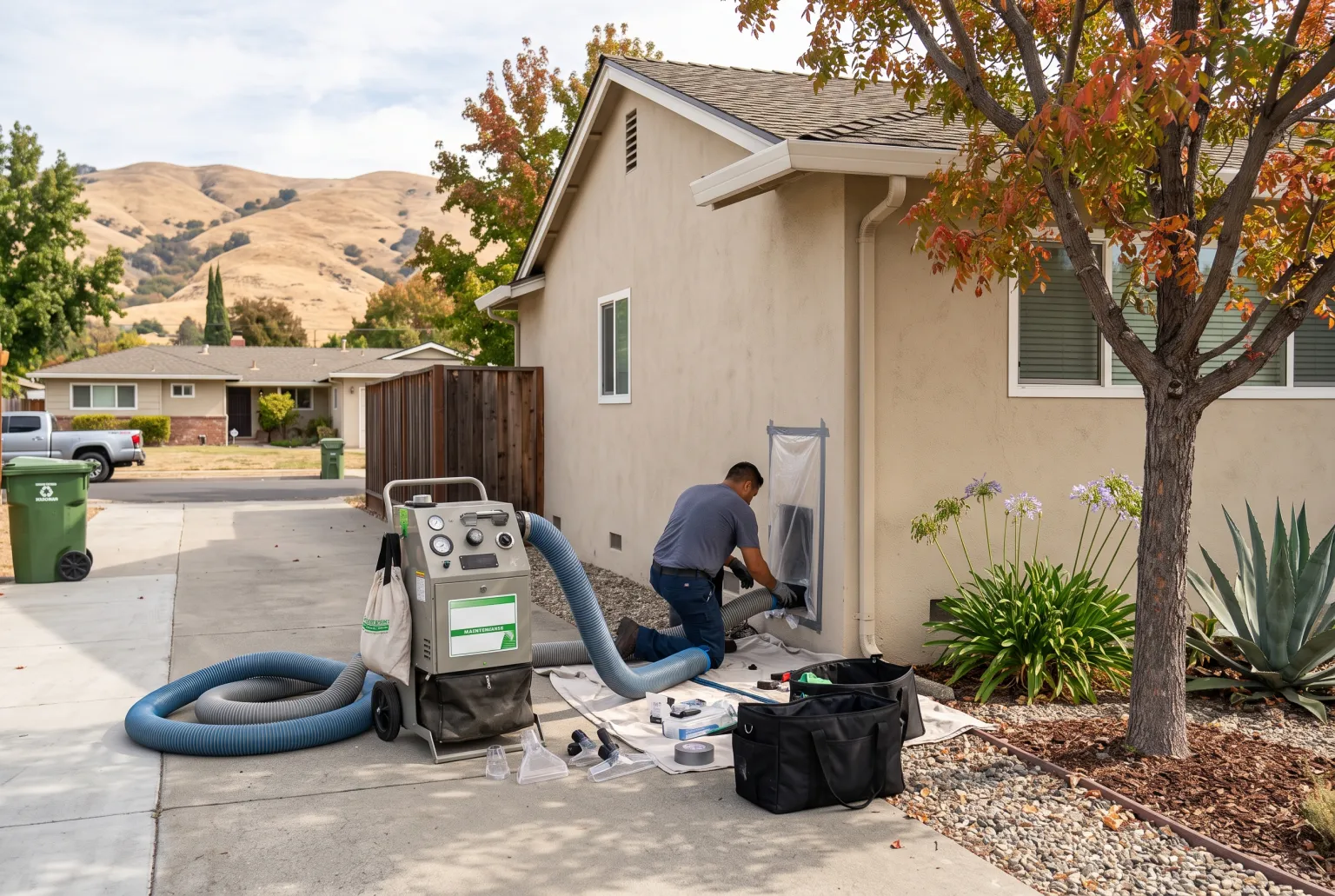
- For cleaning, we put the duct system under negative pressure to pull debris out while loosening buildup inside the ducts with brushes or air tools.
- We clean registers, grilles, and the return area, and install a fresh filter.
- We check airflow and system operation after the work is done.
- We walk you through what we did and anything we'd suggest keeping an eye on.