
The short answer
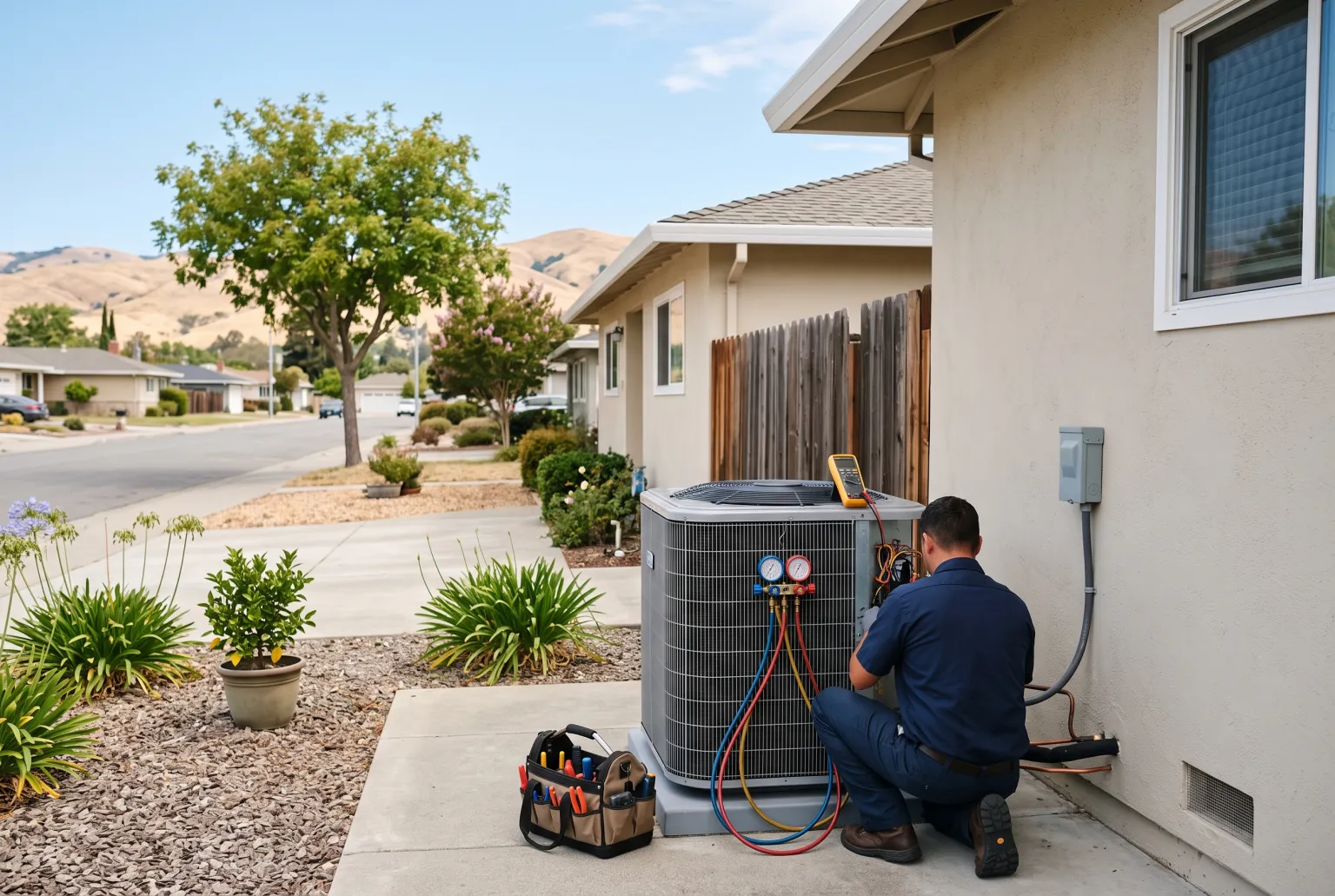
Most homes benefit from a maintenance visit once a year per system, ideally before summer for cooling and before winter for heating. A visit includes cleaning, testing, and safety checks that catch small problems before they turn into breakdowns. Heat pumps that do both jobs often get a check before each season.
Your heating and cooling equipment works hardest when you need it most: the first hot stretch of summer and the cold, damp nights of winter. Routine maintenance is how you keep a furnace, air conditioner, or heat pump running safely and efficiently between those peaks. ArcticPoint HVAC Repair services systems for homeowners in San Jose and surrounding South Bay communities. On this page we explain the signs your system is due for attention, what a maintenance visit actually covers, how we help you decide between repair and replacement, what affects the cost, and what to expect when a technician arrives.
Signs Your System Needs Maintenance
Many homeowners only call when something stops working, but most systems give warning signs well before that point. The Santa Clara Valley's dry summers mean air conditioners and heat pumps run long hours, especially in the hotter inland and southern parts of the valley. Dust and pollen collect on filters and coils over the summer. Mild, damp winters ask less of a furnace, but they can hide problems until the first truly cold night.
If you notice any of the following, it's a good time to schedule a visit:
- Rooms that heat or cool unevenly, or a system that runs longer than it used to
- Weak airflow from vents, even with a fresh filter
- Utility bills climbing without a change in how you use the system
- New noises such as rattling, squealing, grinding, or loud clicking at startup
- A burning, musty, or electrical smell when the system turns on
- Short cycling, where the system turns on and off frequently
- Water pooling around the indoor unit or ice on refrigerant lines
- More dust in the house or allergy symptoms that seem worse indoors
- More than a year since your last professional service
What We Check During a Maintenance Visit
A maintenance visit is more than a quick look. Our technicians work through a checklist tailored to the type of equipment you have, whether that's a gas furnace, a central air conditioner, a heat pump, or a ductless mini-split. The goal is to confirm everything is clean, operating within normal ranges, and safe.
Depending on your system, a visit typically includes:
- Inspecting and replacing or cleaning the air filter
- Cleaning the outdoor condenser coil and checking the indoor evaporator coil
- Checking refrigerant pressures and looking for signs of leaks
- Testing capacitors, contactors, and electrical connections, and tightening loose wiring
- Inspecting the blower motor, fan, and belt where applicable
- Clearing the condensate drain line and checking the drain pan
- On gas furnaces, inspecting the burners, flame sensor, ignition, and heat exchanger, and checking venting for safe exhaust
- Testing the thermostat and verifying the system cycles correctly in heating and cooling modes
- Measuring temperature difference across the coil and checking airflow at the vents
Repair or Replace: Making the Right Call
Sometimes maintenance turns up a part that's worn out or failing. When that happens, we explain what we found, show you if possible, and lay out your options. Many issues, such as a weak capacitor, a dirty flame sensor, or a clogged drain line, are straightforward repairs. Others, like a cracked heat exchanger or a failing compressor on an older system, raise a bigger question about whether repair still makes sense.
We look at the age and condition of the equipment, how often it has needed repairs, how efficient it is compared with newer options, and how comfortable your home is overall. We won't push you to replace a system that has plenty of life left.
If you're planning ahead, it helps to know the local rules. Bay Area Air District appliance rules don't require you to replace working equipment; they apply only when a furnace or water heater fails or is replaced. Under the district's furnace rule, gas furnaces manufactured from 2029 must meet a zero-NOx emission standard, which in practice points homeowners toward heat pumps for replacements after that date. The zero-NOx date for small water heaters was set for 2027, but the Air District Board is considering amendments in November 2026 that could delay it, so check the current rule before planning a water heater replacement.
On incentives: the federal tax credit that covered qualifying heat pumps applied only to systems placed in service before December 31, 2025, and isn't available for new installations. Bay Area homeowners can still check BayREN and their local clean energy provider for current heat pump and electrification incentives. Those programs change by funding cycle, so we confirm the current offer before including it in any quote.
What Affects the Cost of Maintenance
We give you a clear quote before any work begins. Several factors shape the cost of a maintenance visit:
- The type and number of systems, such as a furnace and AC versus a single heat pump or multiple mini-split heads
- How long it has been since the last service and how much cleaning is needed
- Access to the equipment, including attic, crawlspace, or rooftop installations
- The age of the system and how readily parts are available
- Any repairs or replacement parts found during the inspection, which we quote separately for your approval
- Whether the visit is scheduled in advance or needed after hours
How a Maintenance Visit Works
First, you schedule a time that works for you. We'll ask a few questions about your equipment and any issues you've noticed so the technician arrives prepared.
When the technician arrives, they'll talk with you about how the system has been running, then work through the inspection and cleaning checklist. Most of the work happens at the indoor unit, the outdoor unit, and the thermostat, so we'll need access to each.
Afterward, the technician walks you through what they found, including anything that's wearing out and should be watched. If a repair is needed, you'll get a clear explanation and a quote before we do anything further. You decide what happens next.
If your system fails outside regular hours, ArcticPoint HVAC Repair offers 24/7 emergency service.