
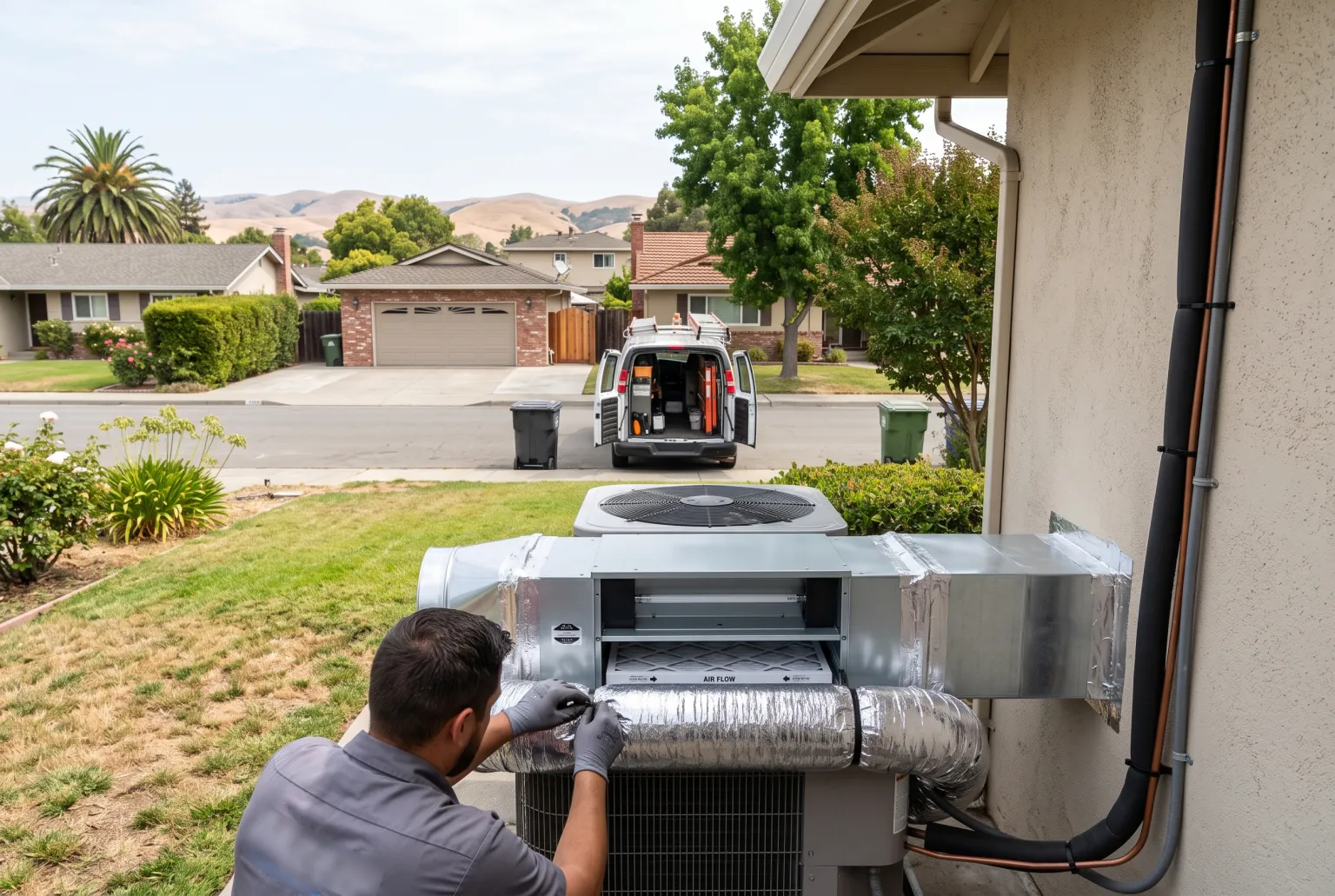
The short answer
Indoor air quality service means finding the real source of dust, odors, humidity problems, or allergy triggers in your home and fixing it. Most problems come from filtration, ductwork, moisture, or ventilation. Many can be solved with repairs and adjustments rather than new equipment.
The air inside your home passes through your heating and cooling system many times a day. When filters clog, ducts leak, or humidity drifts too high or too low, you notice it as dust that keeps coming back, stuffy rooms, lingering odors, or allergy symptoms that ease when you leave the house. ArcticPoint HVAC Repair helps homeowners in San Jose and nearby cities find out what is actually affecting their indoor air, then fix it, using the equipment you already have whenever that makes sense. We look at filtration, ductwork, humidity, ventilation, and combustion safety together, because indoor air problems rarely come from a single cause. If something urgent comes up, we offer 24/7 emergency service.
Signs Your Home Needs an Indoor Air Quality Check
The Santa Clara Valley's climate shapes the air problems we see. Summers are dry, which means more dust and, in some years, outdoor smoke finding its way inside. Winters are mild and damp, and with windows closed, moisture and odors can build up. Inland and southern parts of the valley run noticeably hotter in summer than areas near the Bay, so systems there run longer and filters load up faster.
These are common signs that your indoor air deserves a closer look:
- Dust settles on furniture within a day or two of cleaning
- Allergy or asthma symptoms feel worse at home than elsewhere
- A musty or sour smell when the heat or air conditioning starts
- Condensation on windows or damp spots on walls in winter
- Very dry air, frequent static shocks, or dry skin and sinuses
- Rooms that feel stuffy, stale, or uneven in temperature
- Dark streaks or dirt around supply vents
- Soot near gas appliances, a yellow or flickering burner flame, or headaches that improve when you go outside
What We Check During an Indoor Air Quality Visit
We start with your concerns, then inspect the whole air path, from where air enters the system to where it leaves the vents. The goal is to explain what we find in plain terms, not to hand you a list of products.
If you ever suspect a gas leak or carbon monoxide, leave the house and contact your gas utility or 911 first. Once everyone is safe, we can come out to find and fix the cause.
- Filter type, size, and fit, including gaps that let air bypass the filter
- Blower, evaporator coil, and drain pan cleanliness, where mold and odors often start
- Condensate drain lines for clogs or standing water
- Ductwork in attics and crawlspaces for leaks, disconnections, or damage that pull in dust and insulation
- Return air sizing and airflow, since a starved system circulates air poorly
- Indoor humidity levels in key rooms
- Bathroom and kitchen exhaust fans and overall ventilation
- Gas furnaces and other combustion appliances for proper venting, with carbon monoxide testing
- Existing air cleaners, UV lights, humidifiers, or dehumidifiers to confirm they are actually working
Repair, Upgrade, or Replace: Your Options
Many indoor air problems can be solved with repairs. That might mean switching to a filter that fits properly, sealing a leaky filter cabinet, cleaning a dirty coil, clearing a clogged drain, sealing accessible duct leaks, or getting a weak exhaust fan working again. These fixes often make a noticeable difference on their own.
When repairs are not enough, we may suggest an upgrade: a deeper media filter cabinet, a whole-home air cleaner, a dehumidifier or humidifier, a balanced ventilation system that brings in fresh air while recovering energy, or replacing duct runs that are too damaged to seal.
Replacing your heating and cooling equipment is usually only worth discussing if it is already failing or near the end of its life. Bay Area Air District rules do not require you to replace a working furnace. They apply only when equipment fails or is replaced. Gas furnaces manufactured from 2029 on must meet a zero-NOx standard, which in practice points homeowners toward heat pumps for replacements after that date, so it can be worth planning ahead. The federal 25C tax credit for heat pumps is not available for installations after 2025, but BayREN and local clean energy providers may offer current incentives. We confirm what is available before including it in any quote.
What Affects the Cost of Indoor Air Quality Work
Every home is different, so we give you a written estimate after the inspection rather than guessing over the phone. These are the main factors:
- How much testing and inspection your situation calls for
- Access to your equipment and ducts, such as tight attics or crawlspaces
- The condition and layout of your existing ductwork
- Whether the fix is a repair, an add-on upgrade, or new equipment
- The type of filtration, air cleaning, or humidity control you choose
- Whether new equipment needs electrical work or a new drain connection
- The size of your home and how many systems it has
- Whether any current rebates or incentives apply
How a Visit Works
First, we talk through what you are noticing, when it happens, and which rooms are affected. Details like "it smells musty only when the AC runs" help us narrow things down quickly.
Next, our technician inspects your system and the home's air path, takes humidity readings, and checks combustion safety on any gas appliances. We show you what we find, including photos of hard-to-reach areas like the attic or coil when possible.
Then we explain your options, starting with the simplest fixes. You get a clear written estimate and can decide what to do with no pressure. Many repairs can be done the same visit. Larger upgrades are scheduled at a time that works for you, and afterward we walk you through any new filters or controls so you know how to maintain them.